In the Porsche Cayenne 958 (2011-2018) the transfer case is a known weak point. Porsche even extended the warranty for many of these models because the original units didn’t meet long term durability expectations. The transfer case connects the transmission to the front and rear axles, distributing power and ensuring the Cayenne’s all-wheel drive system works smoothly. When it begins to fail, owners typically notice hesitation, vibration, shuddering, or odd behavior when accelerating lightly, especially once the drivetrain is warm.
The transfer case failures are mainly due to premature wear of the internal clutch packs and gears, which break down faster than expected. Heat buildup inside the sealed unit accelerates this wear, especially during stop-and-go or heavy use. Moisture ingress through the breather system can contaminate the fluid and cause internal damage. In addition, mismatched or uneven tire sizes force the transfer case to constantly compensate, placing extra stress on the system and shortening its lifespan.
Some Cayenne owners have had to replace the transfer case more than once. If you did not purchase your vehicle new, you may not know whether the transfer case has already been replaced. Failures appear to be less common in vehicles produced during the final years of the facelift generation. By that time, Porsche had introduced transfer cases with upgraded clutch packs, which were also installed in many rebuilt units. The only reliable way to confirm whether your transfer case has the updated reinforced clutch plates is by checking the software version of the control unit, since rebuilt cases often carry different part numbers. The revised version is identified as 1150. Accessing this information requires PIWIS diagnostic equipment, although other diagnostic tools may also be able to read it.
Porsche does not officially specify frequent transfer case fluid changes, but experience shows that fresh fluid can extend the life of the unit. Many independent specialists recommend replacing the transfer case fluid every 20,000–30,000 km. Replacing the oil may or may not fix existing transfer case issues, but many owners report noticeable improvements. Since it is an easy DIY job and relatively inexpensive, changing the transfer case oil is worth trying if you are already experiencing problems. It is also a good way to stay on the safe side with preventive maintenance.
When changing the transfer case oil, there are two main pitfalls to avoid. The first is choosing the correct fluid, since Porsche specifies different oils for gasoline, diesel, and hybrid models. The second is overtightening the drain or fill plugs. The case is made of lightweight alloy and it is surprisingly easy to overtighten and crack it.
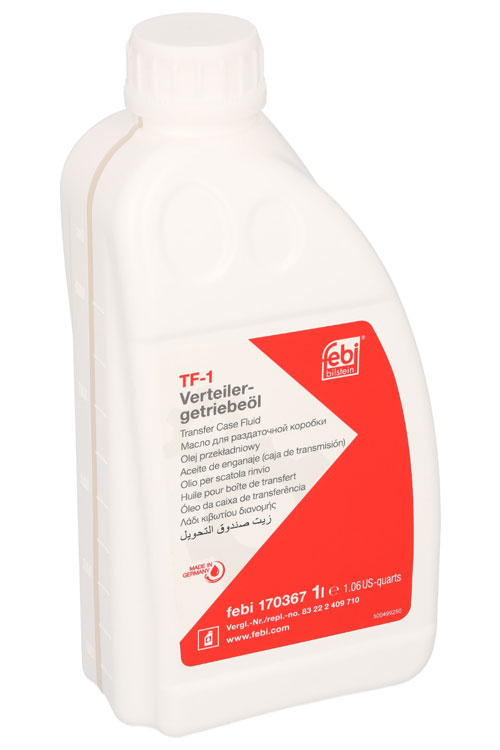
For gasoline models, the specified transfer case fluid is TF 0870, and any fluid meeting that spec should work. I personally used FEBI Bilstein 170367, which comes in a 1-liter bottle. Many owners choose Ravenol DTF-1, which comes in a bottle with a built-in filler spout, saving you the trouble of using a pump or syringe.
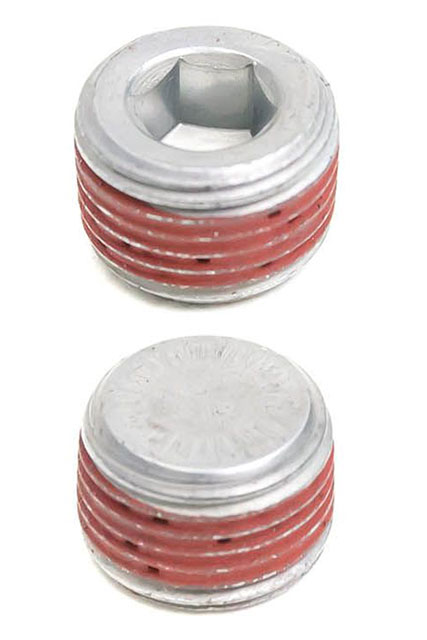
The plugs come from the factory with thread sealer, and while you can reuse them with fresh sealer, it is safer and inexpensive to replace them outright. Rennlist members note that even tightening to the factory torque spec can risk cracking the housing. A safer method is to mark the plug’s position, count the turns, and remember that the plug does NOT sit flush with the case. Taking reference photos can help. When reinstalling, use a short hex key (8mm) and avoid applying excess pressure. Always check for leaks after driving a few kilometers. The following part numbers are for the transfer case plugs: 0AD301115A, 0BU301125, 6000626087, 673002083, 95530111501, A0029909617. Always compare new parts with the originals before installation. This list is provided as guidance only; I have not personally ordered every one of them. Some are Porsche-specific, while others are VW/Mercedes equivalents that are often easier to source and less expensive.
- Park the vehicle on level ground, lift safely, and secure with jack stands. The vehicle must be perfectly level to ensure the correct fluid level. The transfer case is filled until the fluid just starts to flow out of the fill port.
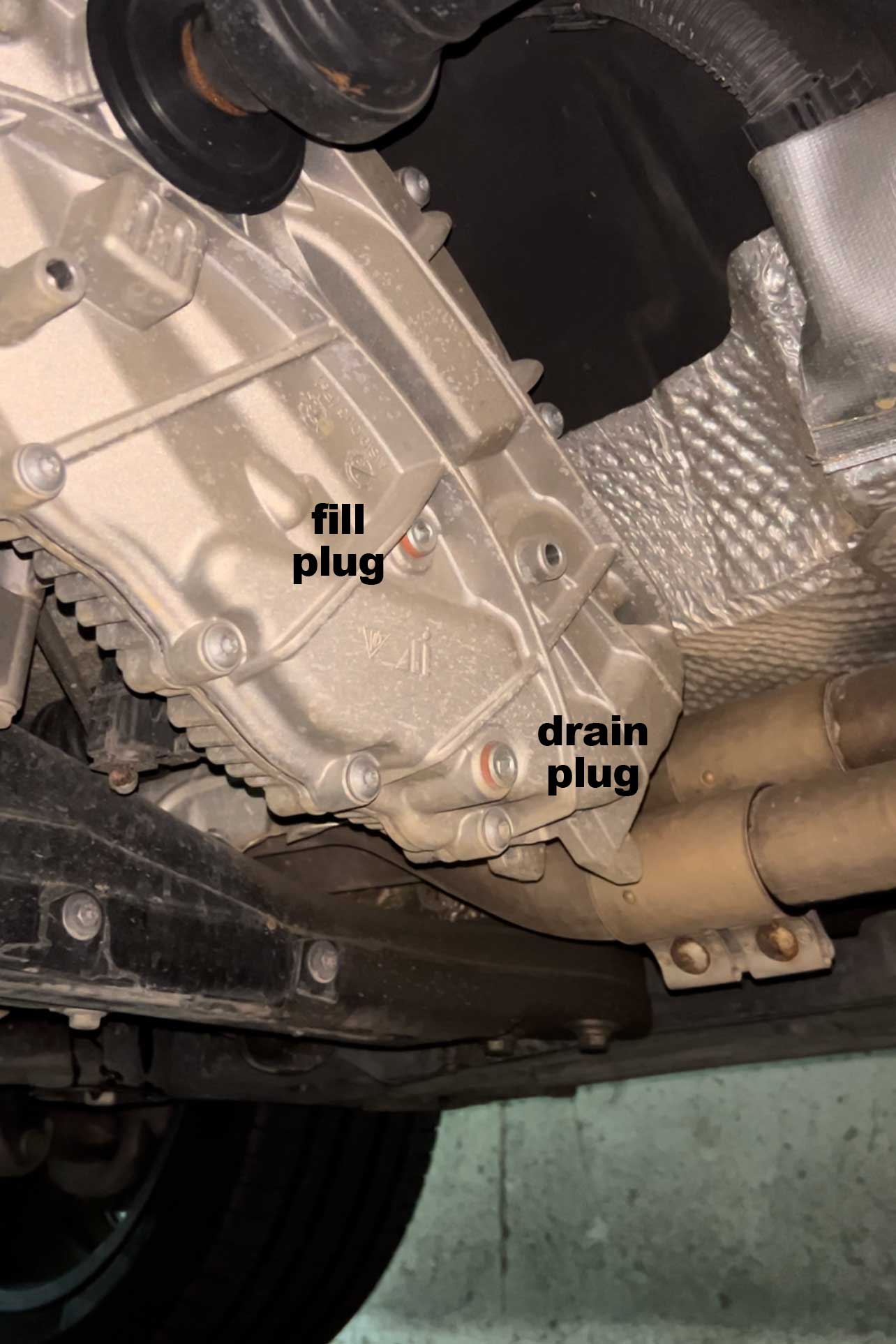
- Locate the transfer case: it sits behind the transmission, between the driveshafts.
- Identify the fill plug and drain plug (at the bottom). Remove the fill plug first, to ensure you can refill before draining.
- Place the drain pan under the case and remove the drain plug. Let the old fluid drain completely.
- Clean and reinstall the drain plug. Do NOT to overtighten, as this can crack the transfer case housing!
- Using a pump or syringe, fill new fluid into the fill hole. The fill process should stop once fluid begins to flow steadily out of the fill hole. The typical capacity is around 0.8 liters.
- Reinstall the fill plug. Do NOT to overtighten, as this can crack the transfer case housing!
- Lower the car, test drive gently, and check for leaks.
In the unfortunate event that the transfer case housing cracks, JB Weld can often seal the leak and keep the oil in. Still, it is far better to avoid this situation altogether by tightening the plugs carefully and with caution.
⚠️ Disclaimer: This post is meant to share general information and personal experience. It is not a substitute for professional mechanical advice. If you are unsure, always have a qualified mechanic handle the work. Any repairs or maintenance you do are at your own risk. As with any work on a motor vehicle, always follow proper safety precautions.